
Description
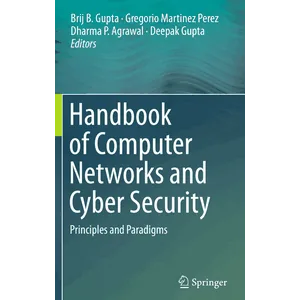
The comprehensive and specialized reference Handbook of Computer Networks and Cyber Security presents a set of modern principles, paradigms, and methods for protecting networks and computing systems from cyberattacks. The book takes a comprehensive look at emerging threats, examines defense mechanisms in distributed environments and the Internet of Things (IoT), and suggests practical solutions for countering hackers.
The handbook is designed for security and privacy professionals to enhance the trustworthiness of digital businesses. Combining theory and case studies, the authors outline future research areas and emphasize the importance of security measures in an age of massive information exchange.
Book Features
- Comprehensive review of security in Ad-hoc networks, cloud computing, and smart grid systems.
- Threat analysis and attack modeling in the field of Internet of Things and social networks.
- Introducing digital forensics tools and techniques for analyzing attacks.
- Focus on security standards, access control policies, and modern encryption.
- Providing artificial intelligence-based solutions to identify intrusions and malicious behaviors.
Book specifications
- Publisher: Springer
- Instructor/Author: Brij B. Gupta
- Number of pages: 957
- Number of chapters: 39
- Format: PDF
Headlines

Pictures

User Guide
Extract the file and run it with the appropriate software.
Download link
File(s) password: www.downloadly.ir
File size
14.5 MB