
Description
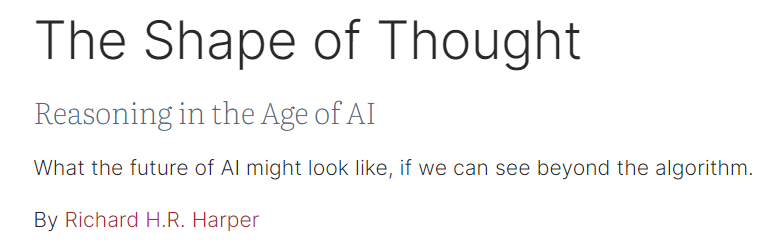
The Shape of Thought: Reasoning in the Age of AI, by Professor Richard Harper, examines how our understanding of intelligence has been limited by the emergence of new technologies. The author argues that today’s AIs function more as pattern recognition engines and are fundamentally different from human intelligence, which is rooted in adaptability and critical thinking.
The book emphasizes that engineers and designers should not simply seek to simulate the human mind, but rather build tools that enhance human experiences in real-life contexts. Taking a human-centered approach, Harper provides a roadmap for the next generation of AI systems that align with the realities of human thought.
Book Features
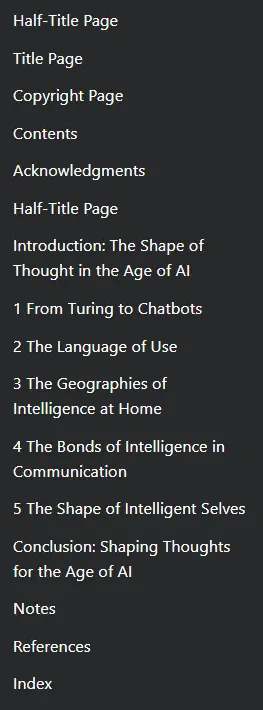
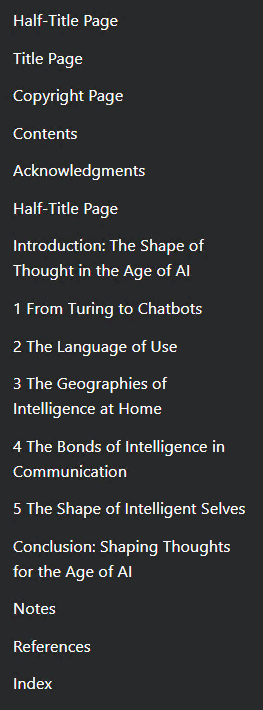
- A detailed analysis of the history of chatbots and artificial intelligence systems from the past to the present.
- Explain the fundamental differences between mathematical calculations and human contextual reasoning.
- Providing strategies for designers to embed artificial intelligence into the current infrastructure of life.
- Exploring the policy and ethical challenges faced by narrow AI systems.
- Criticizing utopian or merely alarmist views and presenting a middle and realistic path.
Book specifications
- Publisher: McGill-Queen’s University
- Instructor/Author: RICHARD HR HARPER
- Number of pages: 220
- Number of chapters: 5
- Format: PDF
Headlines
Pictures
User Guide
Extract the file and run it with the appropriate software.
Download link
File(s) password: www.downloadly.ir
File size
2 MB