Description
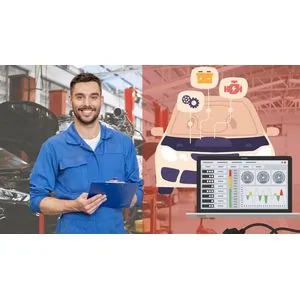
Electronic Diagnostic of Cars Course. This course is a specialized and advanced program that provides participants with the knowledge and skills necessary to diagnose problems in modern vehicles using world-class tools and equipment. This comprehensive course, in line with the rapid developments in the automotive industry, covers all aspects of electronic troubleshooting; from understanding the principles of mechanics and their relationship to vehicle electronic systems to the use of the latest diagnostic equipment for precise repairs. Learners learn how to read and analyze data from various vehicle sensors and gain the ability to correctly identify and effectively fix problems in real-world situations. Through practical case studies and practical training, they gain direct and valuable experience that enhances their technical skills. By offering flexibility in learning, this course allows access to content at any time and place and at the end, a valid certificate is awarded that strengthens the career resume and expands professional opportunities in the field of electronic troubleshooting. This comprehensive program equips individuals with the tools and knowledge necessary to provide high-quality diagnostic services, making them trusted experts for vehicle owners.
What you will learn
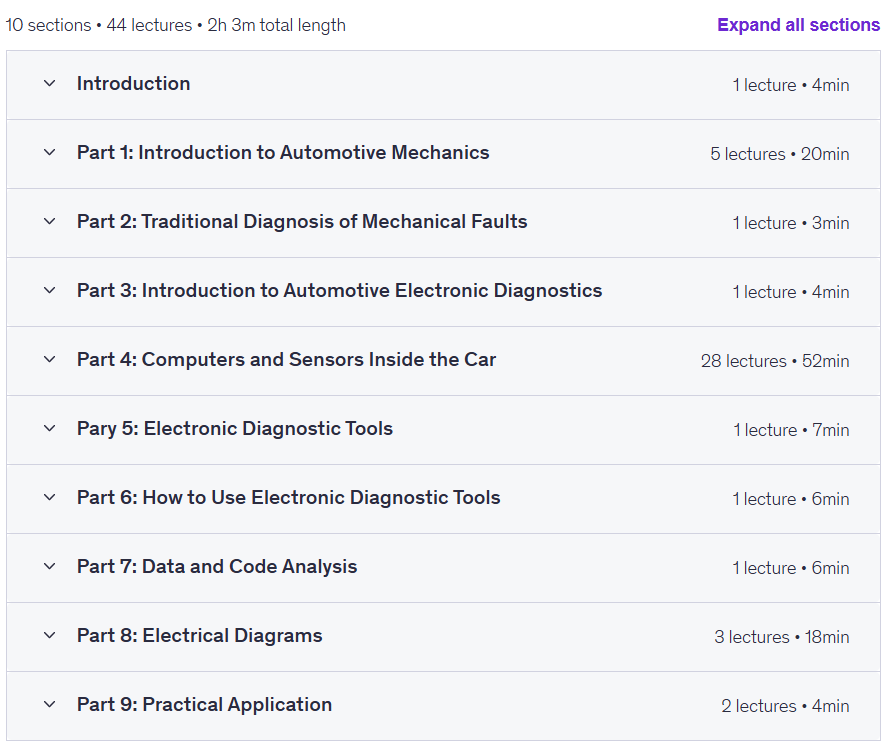
- Main components of a car:
- The key components of a car include the engine, transmission, suspension, and braking systems.
- How the engine and its components work:
- An overview of engine operation and its essential components.
- Various vehicle systems:
- An overview of the various systems of the car, including… (The rest of the sentence is not translated in the English text).
- Use of manual and mechanical tools:
- Use hand tools and mechanical instruments to troubleshoot and diagnose vehicle problems.
- Importance of electronic troubleshooting:
- The advantages of using electronic troubleshooting systems in identifying errors, saving time and reducing effort.
- Computers in the car and their role:
- Familiarity with computers in cars and their role in increasing comfort and safety.
- Sensors:
- Understanding sensors, their names, functions, and locations in different systems.
- Types of troubleshooting and comparison devices:
- Familiarity with different types of troubleshooting devices and their comparison.
- How to connect the diagnostic device to the car:
- Learn how to connect a diagnostic device to a car.
- Reading and interpreting error codes:
- How to read error codes, interpret them, and clear them after troubleshooting.
- Explanation of different types of codes:
- Explanation of different types of codes (P, B, C, U).
- Live data interpretation:
- How to read real-time data from sensors and analyze it to diagnose vehicle performance and identify problems.
- Electrical schematics:
- Types of electrical schematics, how to read them, and their role in electronic troubleshooting.
- Practical application:
- A practical approach to applying the knowledge gained, such as using troubleshooting tools… (The rest of the sentence is not translated in the English text).
This course is suitable for people who:
- They are interested in working in the field of automotive electronic troubleshooting.
- Are a novice or professional mechanic who wants to learn electronic troubleshooting.
- They are a novice or professional automotive electrician.
- They plan to buy a diagnostic tool to repair their car.
- They are interested in the world of cars.
Course details
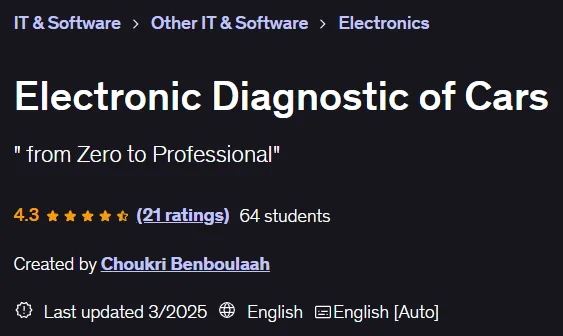
- Publisher: Udemy
- Instructor: Choukri Benboulaah
- Training level: Beginner to advanced
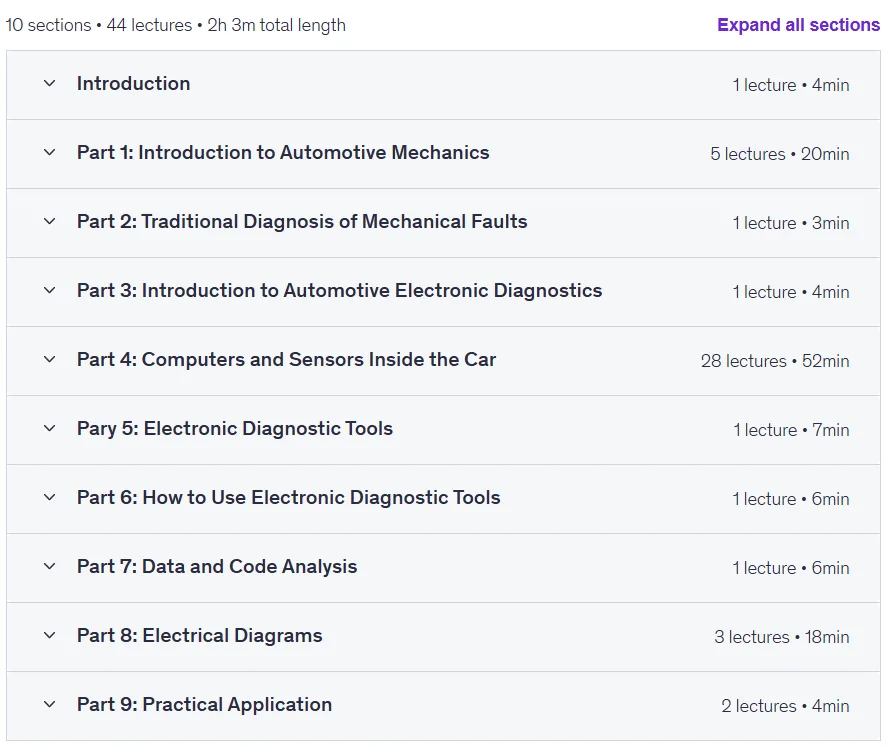
- Training duration: 2 hours and 3 minutes
- Number of lessons: 44
Course headings
Prerequisites for the Electronic Diagnostic of Cars course
- No skills required
- Laptop
- Notebook & Pen
Course images

Sample course video
Installation Guide
After Extract, view with your favorite player.
Subtitles: None
Quality: 720p
Download link
Downloadly
Rapidgator link
File(s) password: www.downloadly.ir
File size
2.4 GB