Description
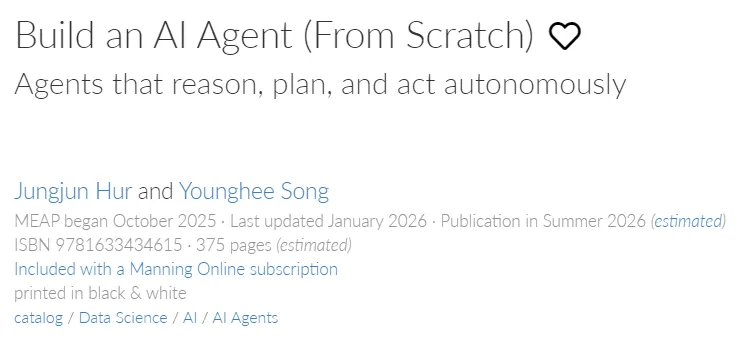
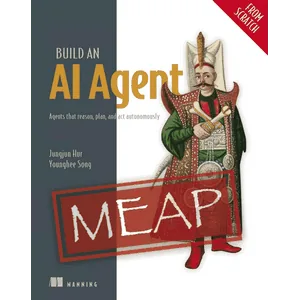
Build an AI Agent (From Scratch) is a guide to moving beyond simple chatbots to AI Agents that can think autonomously, plan, and interact with a variety of tools. Stripping away the layers of magic from heavy frameworks, the authors show the reader what logic and coding goes on behind the scenes of an AI agent.
In this work, the concept of the ReAct (Think, Act, Observe) loop is fully explained and methods of connecting language models to the real world through APIs and external tools are taught. The ultimate goal is for the developer to be able to build an agent that not only responds, but can also independently carry out assigned tasks in different software environments.
Book Features
- Learning to implement the ReAct reasoning loop for autonomous decision-making.
- Learning how to call tools (Tool Calling) without relying on OpenAI’s built-in capabilities.
- Building memory modules to store long-term and short-term goals.
- Implementing advanced RAG systems for more accurate information retrieval.
- Teaching reflection and self-correction mechanisms when an agent fails.
- Ability to extend the built model to multi-agent systems and specialized agents.
Book Specifications: Build an AI Agent (From Scratch)
- Publisher: MANNING
- Instructor/Author: Jungjun Hur
- Number of pages: 266
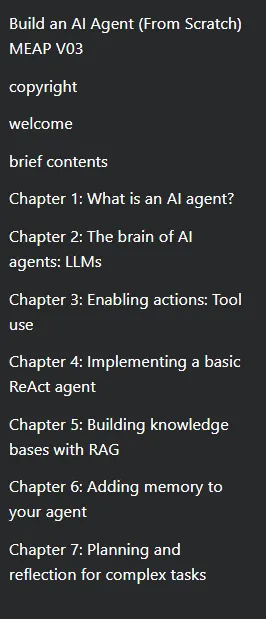
- Number of chapters: 7
- Format: PDF
Headlines

Pictures

User Guide
Extract the file and run it with the appropriate software.
Download link
File(s) password: www.downloadly.ir
File size
11 MB