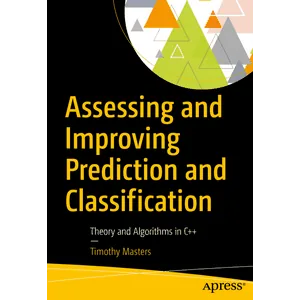
Description
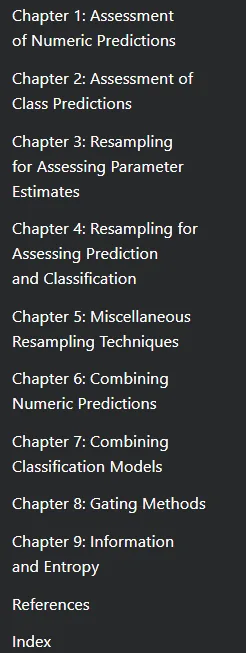
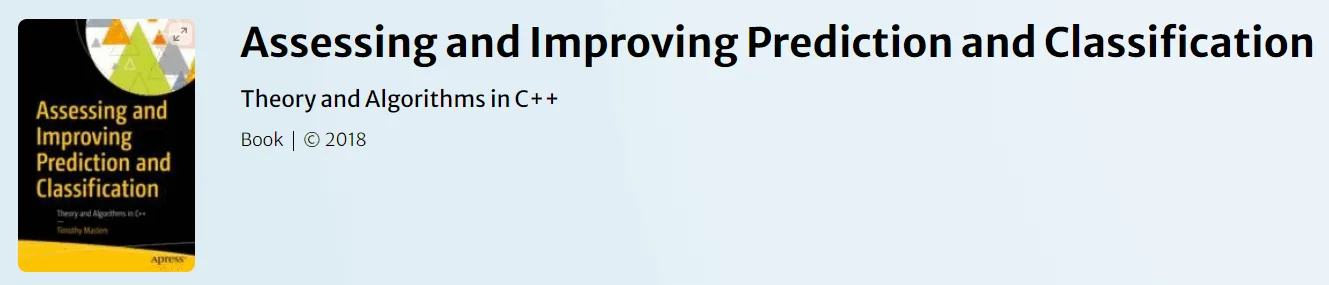
The specialized work Assessing and Improving Prediction and Classification examines rigorous methods for assessing the quality of prediction and classification models in the real world. The author presents advanced algorithms and provides solutions for improving model performance through techniques such as committee-based decision making and boosting.
Based on information theory, the book teaches the reader how to identify redundant variables and build robust and reliable models. All algorithms presented in the book are accompanied by C++ code, but the concepts are explained in such detail that programmers in any other language can also benefit from them.
Book Features
- Using information theory for rapid screening of predictor variables.
- Teaching Monte Carlo methods to evaluate the role of chance in the results obtained.
- Providing practical solutions for calculating confidence intervals and levels of accuracy in decision-making.
- Investigating methods for combining multiple models to achieve higher classification accuracy.
- Focus on the practical application of algorithms rather than just abstract theories.
Book specifications
- Publisher: Apress
- Instructor/Author: Timothy Masters
- Number of pages: 530
- Number of chapters: 9
- Format: PDF
Headings Assessing and Improving Prediction and Classification
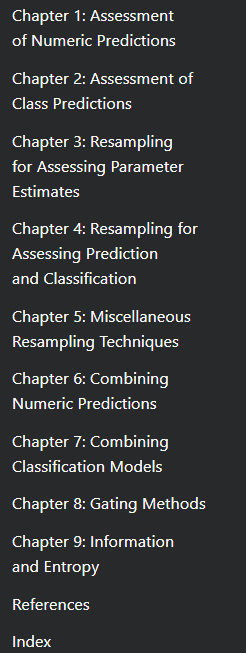
Pictures
User Guide
Extract the file and run it with the appropriate software.
Download link
File(s) password: www.downloadly.ir
File size
4.2 MB