Description
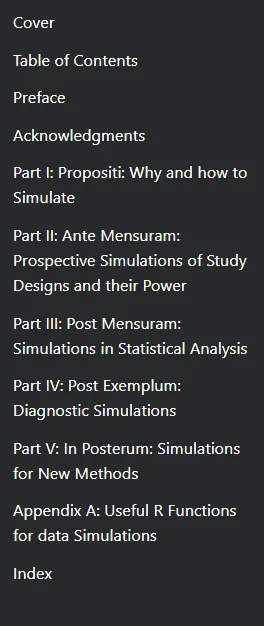
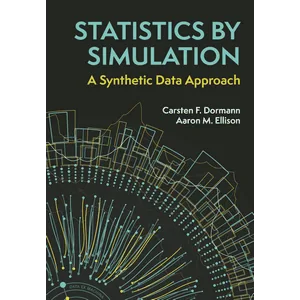
Statistics by Simulation: A Synthetic Data Approach explores one of the most innovative approaches to data analysis, which uses simulation and synthetic data generation to better understand statistical models, rather than relying solely on real data. The author explains in simple language how modern tools can be used to recreate environments that allow analysts to test their hypotheses in controlled conditions without the constraints of real data.
The main focus of this book is on teaching the skills needed to build more accurate predictive models and manage uncertainty in scientific and commercial projects. This approach provides practical and powerful solutions, especially for researchers who are faced with a lack of sensitive or large data sets, to analyze complex phenomena with greater precision.
Book Features
- Step-by-step teaching of statistical concepts using numerical simulation techniques.
- Providing a comprehensive methodology for generating synthetic data to preserve privacy and test models.
- Focus on practical applications in the areas of data analysis skills and computer science.
- Exploring common challenges in interpreting simulation results and how to optimize them.
Book specifications
- Publisher: Princeton University Press
- Lecturer/Author: Carsten F. Dormann
- Number of pages: 457
- Number of chapters: 12
- Format: PDF
Headlines

Pictures

User Guide
Extract the file and run it with the appropriate software.
Download link
File(s) password: www.downloadly.ir
File size
11.5 MB