Description
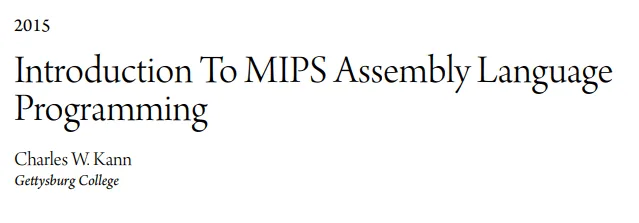
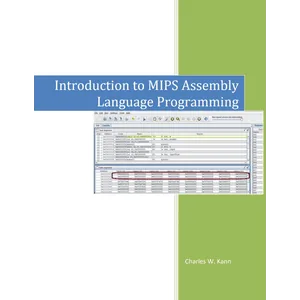
Introduction To MIPS Assembly Language Programming is written by Charles Kahn to familiarize students with the fundamentals of computer architecture and low-level programming. Using the MIPS architecture, the author teaches concepts that are vital for any programmer who wants to understand how high-level code is executed in hardware.
The book goes beyond just teaching instructions and builds a bridge between high-level languages like Java or C++ and machine language. By examining concepts such as memory management (Stack and Heap), registers, and logical operations, the student learns how decisions made in high-level languages affect hardware performance.
Book Features
- Comprehensive training on working with the MARS simulator to run assembly codes.
- A detailed explanation of how to convert high-level language control structures (such as loops and conditionals) to assembly.
- Review of memory structure and the difference between pointer and value.
- Includes numerous code examples and challenging exercises at the end of each chapter.
- Hierarchical structuring of content from simple concepts to more complex topics.
Book specifications
- Publisher: Gettysburg College
- Instructor/Author: Charles W. Kann
- Number of pages: 179
- Number of chapters: 9
- Format: PDF
Headlines
Pictures

User Guide
Extract the file and run it with the appropriate software.
Download link
File(s) password: www.downloadly.ir
File size
4 MB