Description
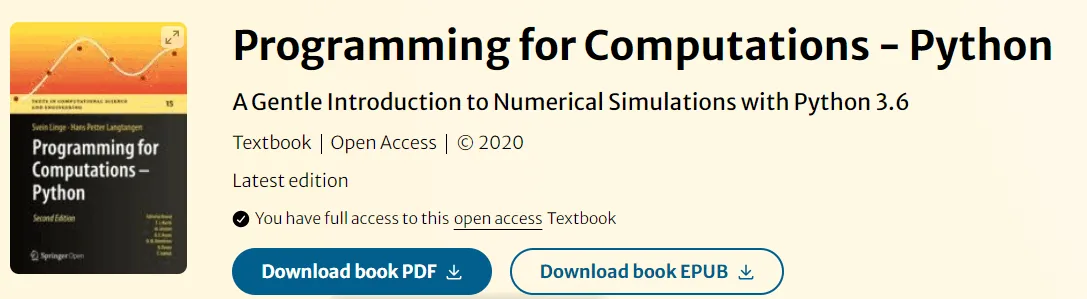
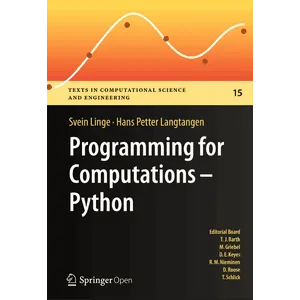
Programming for Computations – Python is an ideal starting point for engineering and science students with no programming background. By focusing on the use of Python in solving mathematical and scientific problems, the authors provide the shortest possible path to learning the skills necessary for numerical simulations and complex computations.
The book teaches concepts from simple to complex in a gentle and calm language, always maintaining the connection between programming codes and mathematical formulas. The main goal is to introduce programming to the student not as an abstract knowledge, but as a powerful tool for solving real challenges in engineering and physics, so that his motivation to learn doubles.
Book Features
- Explaining programming concepts from the ground up, focusing on Python version 3.6 and above.
- Teaching numerical methods for solving mathematical equations.
- Emphasis on designing clean code, using functions, and performing automated tests to verify the correctness of the results.
- Providing numerous examples in the fields of physics, mechanics, and other engineering sciences.
Book specifications
- Publisher: Springer
- Instructor/Author: Svein Linge
- Number of pages: 244
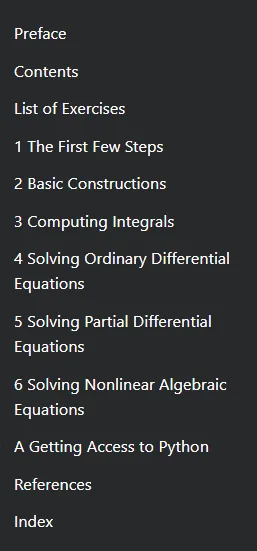
- Number of chapters: 6
- Format: PDF
Headlines

Pictures

User Guide
Extract the file and run it with the appropriate software.
Download link
File(s) password: www.downloadly.ir
File size
11.1 MB