Description
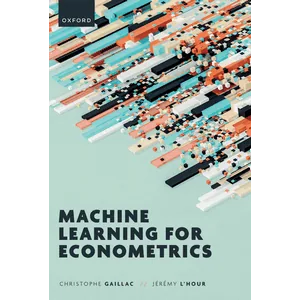
Machine Learning for Econometrics bridges the gap between traditional econometrics and new machine learning technologies, enabling economists to use large, unstructured data for more sophisticated analysis. The authors focus on how modern AI tools can replace or complement classical statistical methods in identifying causal relationships and making economic predictions.
The material is structured in such a way that, in addition to the theoretical foundations, it also covers empirical applications in the real world, such as macroeconomic forecasting and policy impact analysis. This work attempts to make the mathematical complexities of machine learning models understandable and implementable for students and researchers in the fields of economics and finance by providing practical codes and economic examples.
Book Features
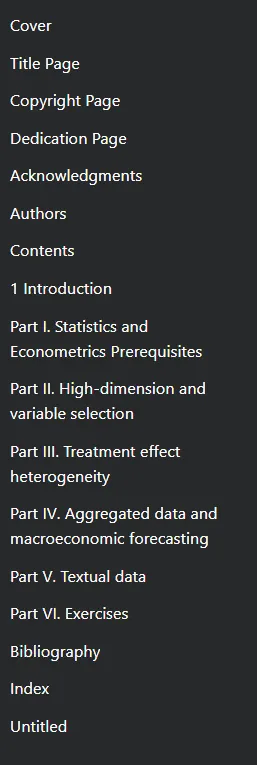
- Examining automatic variable selection in high-dimensional contexts.
- Teaching techniques for estimating treatment effect heterogeneity.
- Application of natural language processing (NLP) in the analysis of economic texts and financial reports.
- Providing synthetic control methods for policy evaluation.
- Combining classical statistical concepts with modern algorithms such as random forests and neural networks.
- Includes programming exercises and ready-made codes for direct implementation in research projects.
Book specifications
- Publisher: Oxford
- Instructor/Author: CHRISTOPHE GAILLAC
- Number of pages: 353
- Number of chapters: 6
- Format: PDF
Headlines

Pictures

User Guide
Extract the file and run it with the appropriate software.
Download link
File(s) password: www.downloadly.ir
File size
11.3 MB