Description
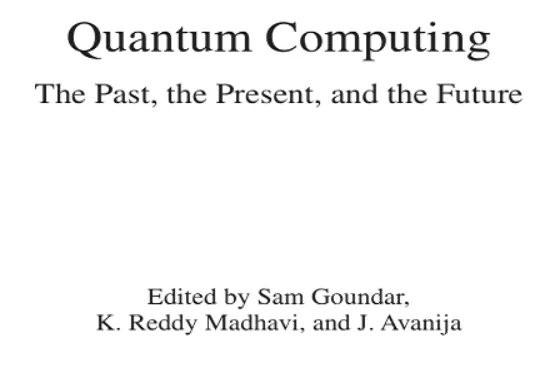
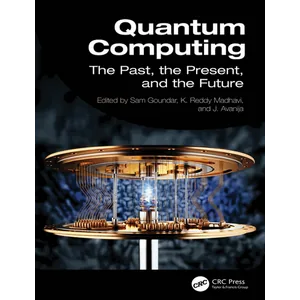
Quantum Computing: The Past, the Present, and the Future is a comprehensive review of one of the most revolutionary technologies of the century, quantum computing. The authors take a look at the historical roots and foundations of classical physics, gradually introducing the reader to the fascinating world of quantum physics and its governing principles. The book not only explains theoretical concepts such as superposition and entanglement, but also discusses the physical implementation of qubits and current engineering challenges.
A significant part of the book is devoted to the future of this technology and its impact on cybersecurity and cryptographic algorithms. The authors explain how quantum computers can process complex problems that are insoluble for the most powerful current supercomputers in a short time. In scientific but understandable language, this work provides a clear vision of the role of quantum computing in solving future commercial and scientific problems.
Book Features
- A detailed explanation of the three principles of quantum computing: superposition, measurement, and entanglement.
- Exploring different methods of making qubits, including quantum dots and superconducting circuits.
- Teaching quantum-based algorithms such as the “Shor” algorithm for parsing large numbers.
- Analyzing the effects of quantum on the world of cryptography and introducing quantum-resistant algorithms.
- Exploring real-world applications in materials science, chemistry, biology, and artificial intelligence.
- Providing modern frameworks and taxonomies for classifying knowledge in this field.
Book specifications
- Publisher: CRC Press
- Instructor: Sam Goundar
- Number of pages: 591
- Number of chapters: 21
- Format: PDF
Headlines
Chapter 1: Quantum Computing – A Journey Through Time
Chapter 2: Evolution of Quantum Computing
Chapter 3: Fundamentals of Quantum Computing
Chapter 4: Quantum Computing Paradigms – Bridging Foundational Quantum Mechanics with Contemporary Computational Architectures
Chapter 5: Superposition in Quantum Computing – Advances with Google’s Willow Chip and IBM’s Quantum Systems
Chapter 6: Current State of Quantum Computing
Chapter 7: A Systematic Literature Review of Quantum Computing
Chapter 8: A Framework and Taxonomy for Quantum Computing
Chapter 9: Quantum Computing – Foundations, Principles, and Modern Applications
Chapter 10: Next-Gen Quantum Computing – The Fusion of Atoms and Photonic Innovation
Chapter 11: Quantum Computing – Real-World Applications and Its Transformative Potential
Chapter 12: Quantum Communication and Secure Channels
Chapter 13: Quantum Computing and Teleportation
Chapter 14: Quantum Internet and its Revolutionary Implications for Modern Electronic Devices
Chapter 15: Quantum Communication Systems for Ensuring Secure 6G Network Infrastructure
Chapter 16: Analysis of Post-Quantum Cryptography Algorithms
Chapter 17: Journey into Quantum Computing – Cryptographic Security and Learning Algorithms
Chapter 18: Enhancing Healthcare Data Security Using Quantum Homomorphic Encryption
Chapter 19: Revolutionizing Data Science with Quantum Computing – Principles, Applications and Machine Learning Integration
Chapter 20: Advancing AI with Quantum: Quantum Machine Learning Classifiers (QML) and Transfer Learning in Neural Networks
Chapter 21: Evolutionary Algorithms and Quantum Computing – Pioneering the Next Era of Intelligence and Innovation
Pictures
User Guide
Extract the file and run it with the appropriate software.
Download link
File(s) password: www.downloadly.ir
File size
11.2 MB