Description
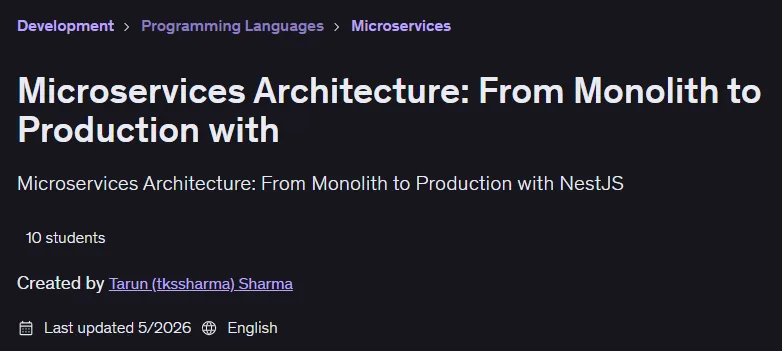
Microservices Architecture: From Monolith to Production with. This course is a hands-on, hands-on course that takes you through the implementation of microservices architecture patterns used by companies like Netflix, Uber, and Amazon. Students learn how to design, build, and deploy scalable distributed systems with real-world projects. The course is written without any fluff and focuses on practical code that users can use right away. Over 15 microservice architecture patterns and constructs are covered with real-world implementations throughout the course, covering the complete transition from a monolith architecture to a Kubernetes deployment. This course teaches you how to build production-ready microservices using Node.js, NestJS, and Express. The instructor explores synchronous and asynchronous communication patterns so students can create event-driven structures. Topics related to distributed data management, methods for maintaining system stability in critical situations, and system security also form an important part of the content. This course attempts to provide software engineers with sufficient knowledge to design and deploy scalable architectures to prepare for senior-level and software architect job interviews. The final project is built on containerization and modern software engineering tools.
What you will learn
- System architecture and design concepts:
- Understanding the principles of microservices architecture and its differences from integrated architecture or SOA to make the right decisions in projects.
- Using Domain-Driven Design to define service boundaries.
- Applying the Strangler Fig pattern to safely migrate from a monolithic platform to microservices.
- Implementing the 12-Factor App methodology for developing cloud-native microservices.
- Communication and data exchange patterns:
- Implementing synchronous communications using REST and gRPC protocols.
- Building asynchronous and event-driven systems using RabbitMQ and Apache Kafka messengers.
- Designing communication layers with API Gateway and Backend-for-Frontend patterns.
- Data management and system stability:
- Using a dedicated database model for each service (Database-per-Service).
- Using the Saga pattern to manage distributed transactions and data synchronization strategies.
- Implementing CQRS and Event Sourcing patterns for complex, high-scale systems.
- Apply sustainability techniques such as Circuit Breaker, Retry, and Bulkhead.
- NestJS exclusive features and DevOps tools:
- Build native microservices with TCP, AMQP, and gRPC transports in the NestJS framework.
- Containerization of microservices using Docker and Docker Compose tools.
- Implement CI/CD pipelines to automatically build and deploy applications.
- Developing and deploying serverless microservices on cloud platforms.
This course is suitable for people who:
- Backend developers who want to move from monolithic architectures to microservices.
- Node.js developers who are interested in building distributed and scalable systems.
- Software architects looking for practical, real-world implementation patterns in large projects.
- Technical team leaders who plan to migrate the organization’s legacy systems to a microservices architecture.
- Full-stack developers who want to strengthen their expertise and skills in the backend of the system.
- DevOps engineers who want to take a developer-centric perspective on microservices architecture.
Course specifications Microservices Architecture: From Monolith to Production with
- Publisher: Udemy
- Instructor: Tarun (tkssharma) Sharma
- Training level: Beginner to advanced
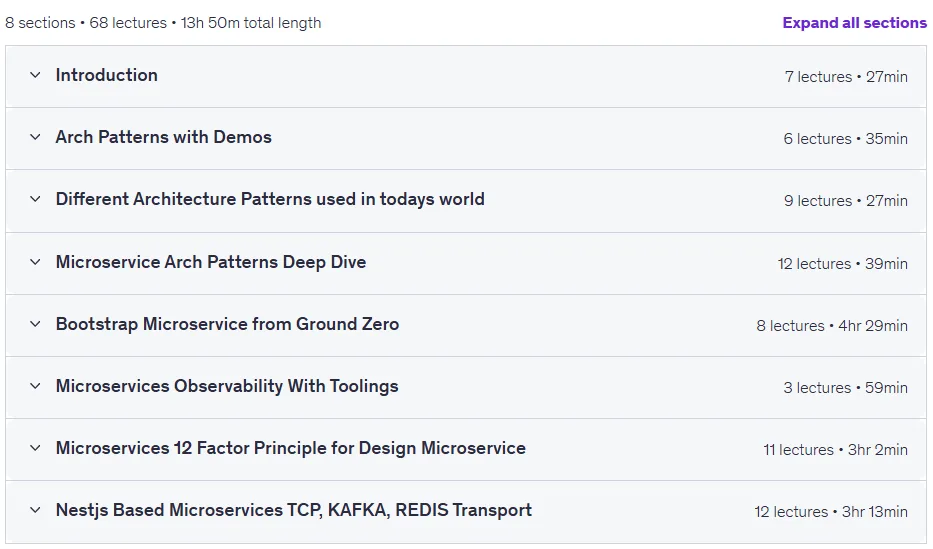
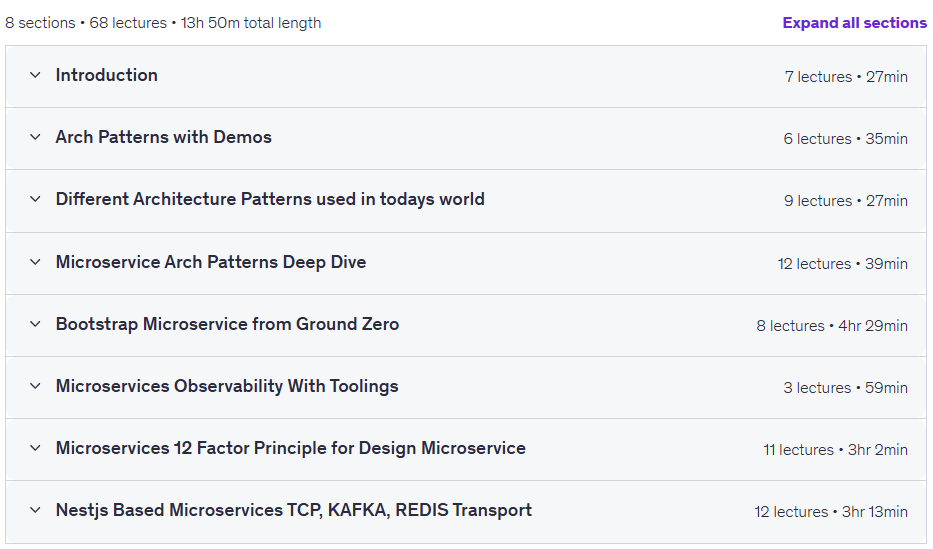
- Training duration: 13 hours and 50 minutes
- Number of lessons: 68
Course topics
Prerequisites for the Microservices Architecture: From Monolith to Production course
- Intermediate JavaScript or TypeScript knowledge (ES6+, async/await, TypeScript basics)
- Basic Node.js and Express experience (building REST APIs)
- Familiarity with databases (basic SQL and NoSQL concepts)
- Understanding of HTTP fundamentals (methods, status codes, REST)
Course images

Sample course video
Installation Guide
After Extract, view with your favorite player.
Subtitles: None
Quality: 1080p
Download link
Rapidgator link
File(s) password: www.downloadly.ir
File size
11.1 GB