
Description
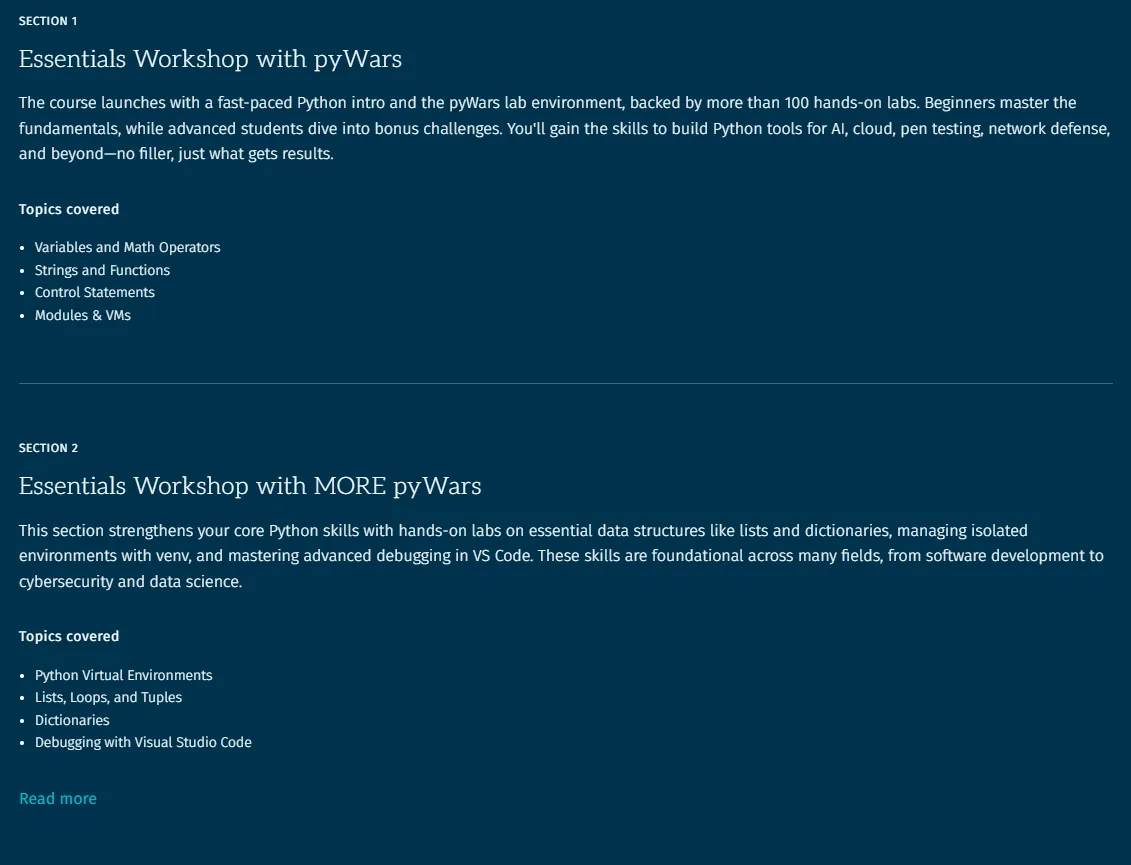
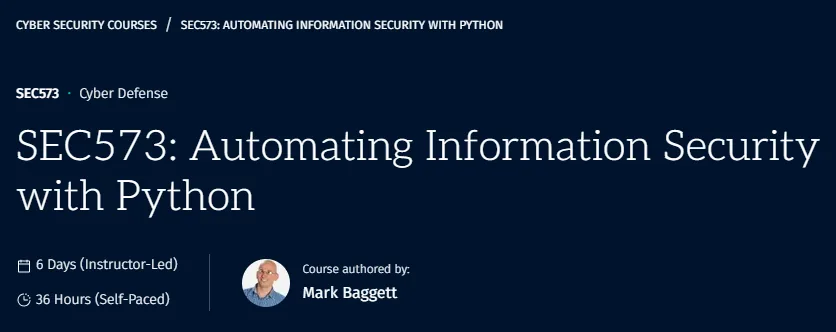
SEC573: Automating Information Security with Python. This course teaches professionals how to use Python to build custom security tools and automate tasks. Designed for all levels, this course starts with the basics and progresses to advanced techniques, preparing you for the GPYC certification. Python is considered an essential skill in cybersecurity, the backbone of the fields of artificial intelligence, data science, and automation. You will learn how to develop algorithms for anomaly detection, big data processing, and threat prediction using libraries such as TensorFlow, Scikit-learn, Pandas, and NumPy. It also covers the use of Python in cloud security to automate monitoring and integrate with APIs for platforms such as AWS, Azure, and GCP. This course will give you the ability to build practical solutions for digital forensics, penetration testing, threat hunting, and simplify repetitive tasks like log analysis and vulnerability scanning so you can respond faster to emerging threats and overcome complex security challenges.
What you will learn
- Use Python to perform routine tasks quickly and efficiently.
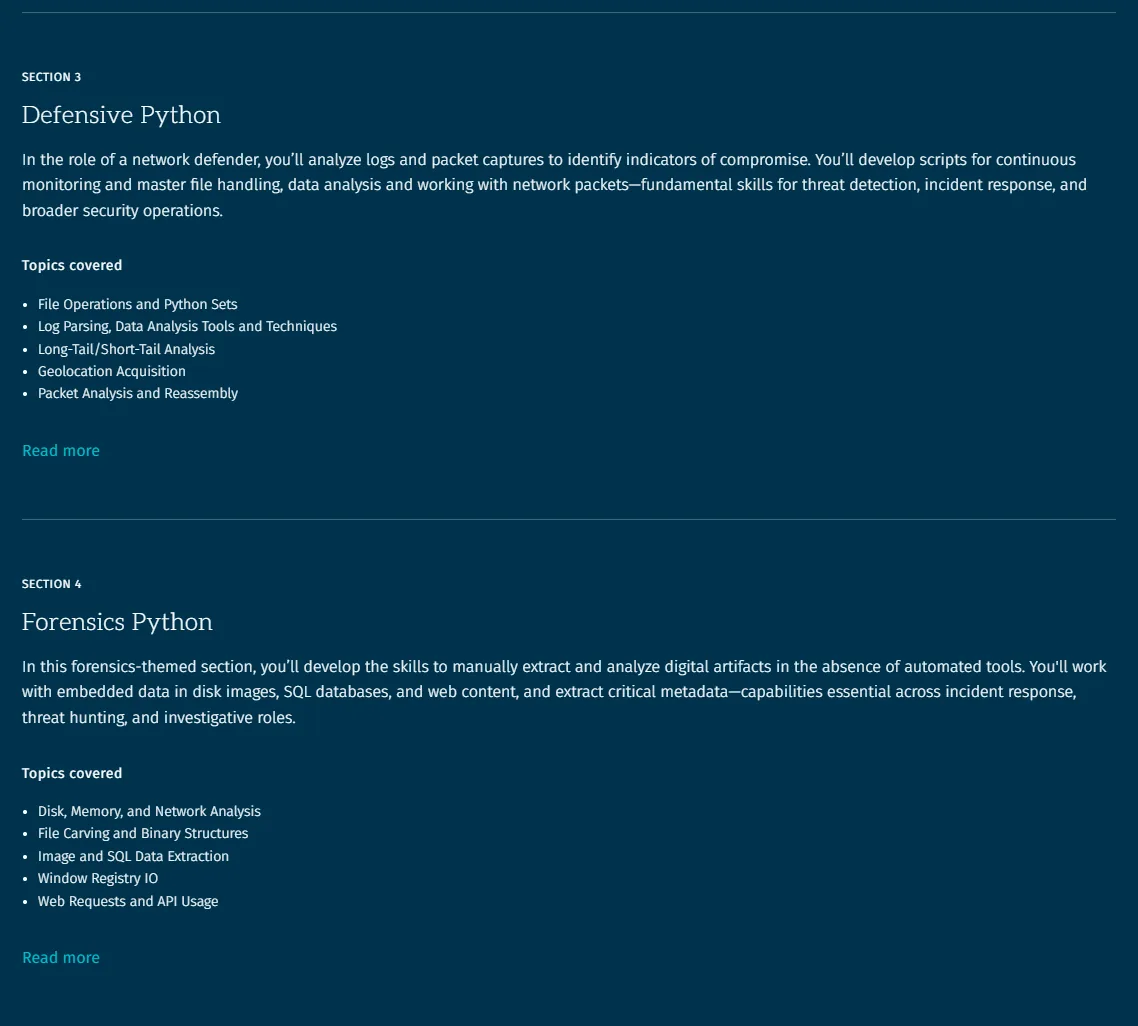
- Automate log analysis and packet analysis with file operations, regular expressions, and analysis modules to detect threats.
- Developing forensic tools to extract binary data and new artifacts.
- Reading data from databases and the Windows registry.
- Interacting with websites to collect information.
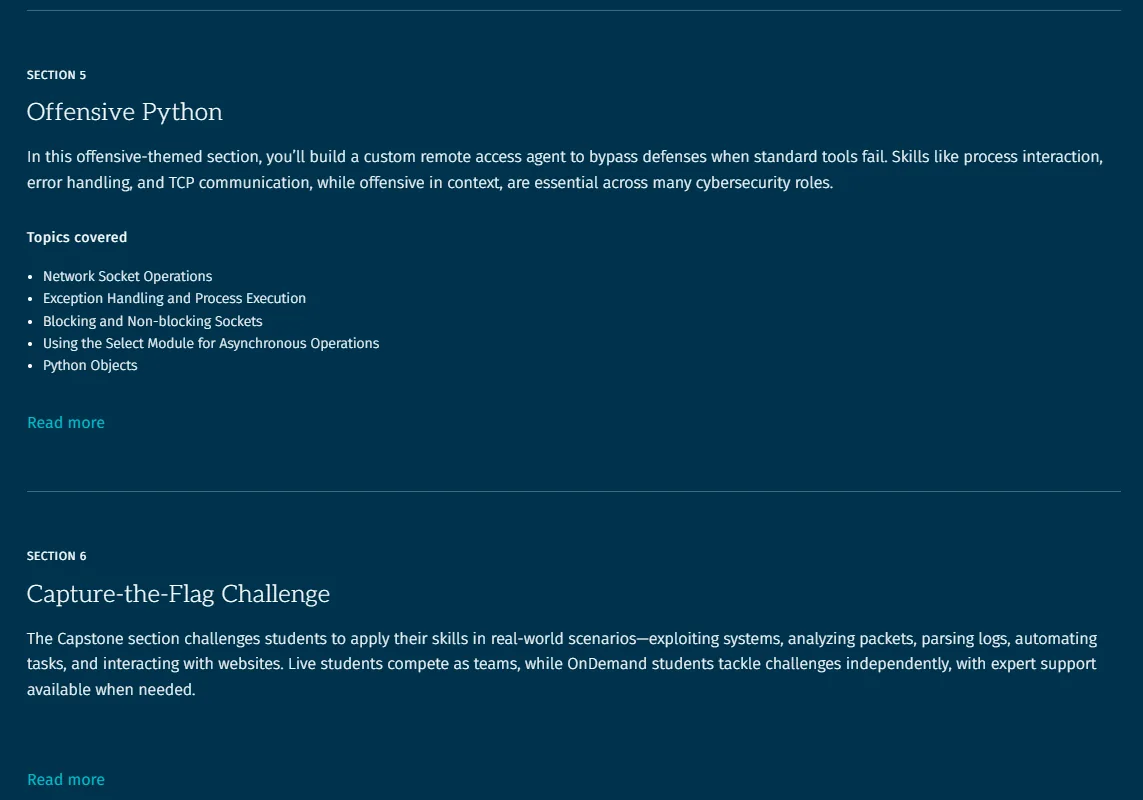
- Development of UDP and TCP client and server applications
- Automate system processes and process their output.
This course is suitable for people who:
- Security professionals: Those who benefit from automating routine tasks so they can focus on what matters most.
- Forensic analysts: Those who can no longer wait for someone else to develop a commercial tool for analyzing digital artifacts.
- Network defenders: Those who examine large volumes of logs and packets to find attackers on their networks.
- Penetration testers: Those who are ready to advance from the level of a scripter to a professional computer offensive operations operator.
- Security professionals: Those who want to transform from consumers of security tools to providers of security solutions.
Course Details SEC573: Automating Information Security with Python
- Publisher: SANS
- Instructor: Mark Baggett
- Training level: Beginner to advanced
- Training duration: 34 hours and 54 minutes
- Number of lessons: 690
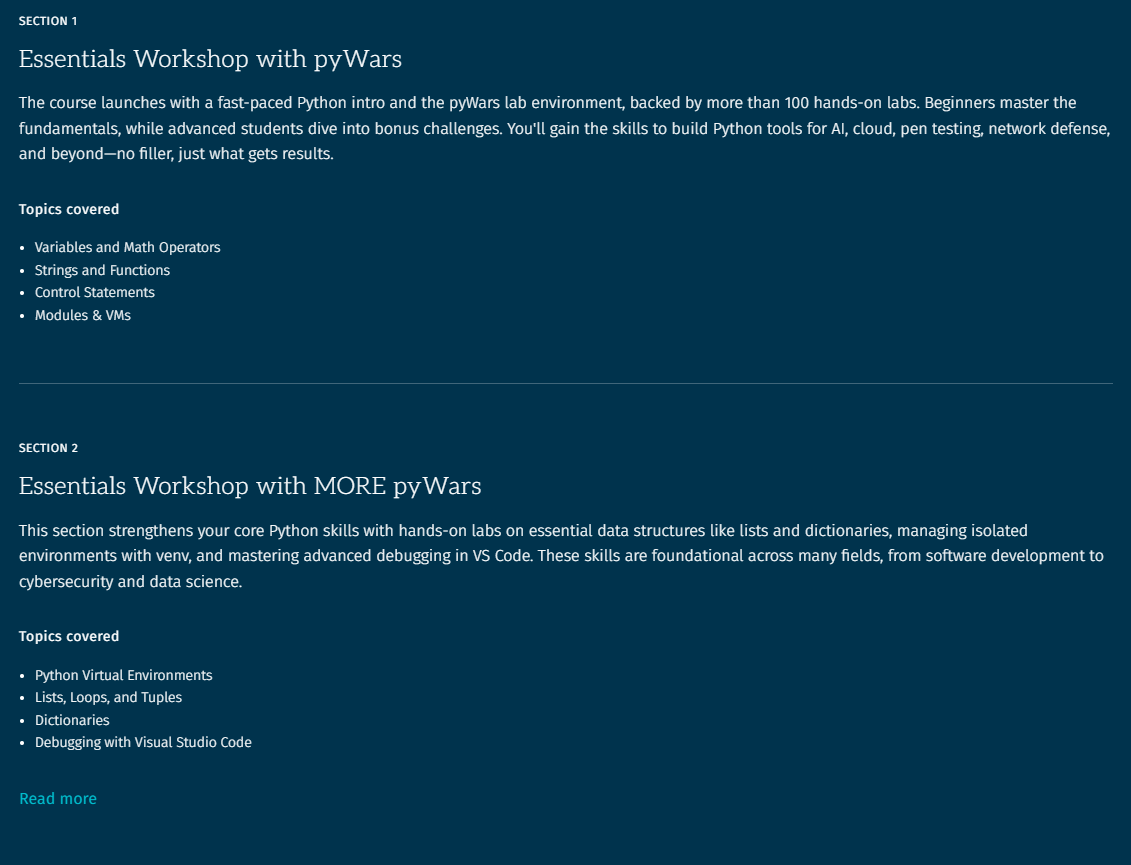
Course headings


Course Prerequisites SEC573: Automating Information Security with Python
- A basic understanding of any programming or scripting language is highly recommended but not required for this course. SEC573 starts with the most basic fundamentals of Python programming. There is no aspect of programming or Python that must be understood before attending this course. The lab environment is self-paced and this allows students who have had some coding experience to advance more quickly than those who have not. You are provided a Virtual Machine that gives you the ability to complete the labs that are in your course book after the live course or your OnDemand access has finished.
Course images

Sample course video
Installation Guide
After Extract, view with your favorite player.
Subtitles: None
Quality: 720p
Download Links
Downloadly
Audio file download link
PDF file download link
USB file download link
Video file download link
Rapidgator
Audio file download link
PDF file download link
USB file download link
Video file download link
Password file(s): www.downloadly.ir
File size
256 MB, 14 MB, 7.4 GB, 7.3 GB